Showing posts with label wikileaks founder. Show all posts

Monday, January 17, 2011

WikiLeaks promises new batch of banking documents


WikiLeaks founder Julian Assange has pledged that his latest leaked documents will reveal corruption and crime in the shadowy world of offshore banking, but observers eager for scintillating revelations about Canadian account holders may be in for a disappointment.

The latest WikiLeaks source to come forward, Rudolf Elmer, a former banker with Swiss financial institution Julius Baer, has previously disseminated confidential banking records from the bank’s offices in the Cayman Islands to media outlets, including The Globe and Mail.

Buried in Mr. Elmer’s first batch of leaked material – a labyrinth of file folders, spreadsheets and Microsoft Word files – were accounts linked to two Canadians: one, a Toronto businessman, and the second, former Hollinger executive David Radler.

At a packed press conference in London on Monday, Mr. Elmer and Mr. Assange were short on specifics about how much new information is in the latest data dump. In 2008, before WikiLeaks was a household name and driving the international news agenda, Mr. Elmer posted details on thousands of accounts that he had downloaded from Julius Baer’s Cayman Islands servers. Mr. Elmer was fired from the bank in 2002 after a long-standing dispute. The former banker has said he is trying to expose how offshore financial institutions use banking secrecy laws to facilitate wide-scale tax evasion, while his former employer has accused him of being “frustrated about unfulfilled career aspirations” and launching a campaign of intimidation.

On Monday, Mr. Radler said he was frequently in the Cayman Islands because of Hollinger’s stake in the island’s premier newspaper company, Cayman Free Press Ltd., and that the accounts were created to hold his directors’ fees. The documents in Mr. Elmer’s 2008 trove contain nothing that indicates wrongdoing by Mr. Radler. It isn’t illegal for a Canadian to have an offshore account, as long as the account holder declares the funds to tax collectors. The documents show that, as of 1999, the former newspaper executive held at least $200,000 in his Julius Baer accounts.

Mr. Radler said all of his Cayman-based funds – which were held in the names of entities such as Sunshine Investments and Rainy Day Trust – were declared to the Canada Revenue Agency.

“When I used to go down, I used to put money there and I used to take out money. And at one time I was considering buying a condo there. But it was always reported. There was never any nonsense,” said Mr. Radler, who famously broke ranks with his former business partner, Conrad Black, agreeing to co-operate with the authorities, plead guilty to one count of fraud and testify against Lord Black.

The Globe was unable to reach the other Canadian, a Toronto businessman, identified in Mr. Elmer’s cache.

If and when WikiLeaks releases the whistleblower’s latest banking details, Mr. Elmer may not be in a position to celebrate the disclosure. The former banker goes on trial later this week in his native Switzerland for allegedly violating that country’s rigid and sacrosanct banking secrecy laws.

Read More

http://www.theglobeandmail.com/news/world/wikileaks-promises-new-batch-of-banking-documents/article1873901/


Monday, December 27, 2010

Assange signs book deals worth more than £1m


Julian Assange has signed book deals worth more than £1m in the US and UK, to allow the WikiLeaks founder to cover his legal fees and maintain the whistleblowing site.

He will be racing a disgruntled former colleague to release an autobiography telling his side of the WikiLeaks story. Both books are to be published by divisions of Random House next year.


Mr Assange is fighting allegations of sexual assault in Sweden while trying to continue the gradual release of thousands of US diplomatic cables through WikiLeaks.

Released on bail by the British high court in mid-December, he spent Christmas wearing a tracking tag, confined to a friend’s mansion home in East Anglia.

The US administration, which has been angered and embarrassed by successive leaks of its foreign-policy secrets through WikiLeaks, is believed to be exploring ways to prosecute Mr Assange.

The controversy did not dissuade readers of Time magazine voting Mr Assange their “person of the year” for his campaign for freedom of information and radical transparency from governments.

He has agreed an $800,000 (£520,000) contract with Knopf, a US imprint of Random House, the Bertelsmann-owned publisher, and another £325,000 deal for the UK with Canongate, an independent publishing house based in Edinburgh.

But although the deals are expected to net Mr Assange more than £1.1m ($1.7m) after the book is sold in other countries and serialised in newspapers around the world, Mr Assange said he had agreed to write his autobiography only reluctantly.

“I don’t want to write this book, but I have to,” he told the Sunday Times. “I have already spent £200,000 for legal costs and I need to defend myself and to keep WikiLeaks afloat.”

Mr Assange did not describe how he would divide the proceeds from his autobiography between his own personal legal costs and the operational funds required by WikiLeaks, which he has described as a large and distributed organisation that is not solely reliant on him.

WikiLeaks’ operational costs have more than tripled since it drew up budgeting plans at the beginning of the year, due to the increased scope of information it has reviewed and published. Before “cablegate”, it released huge amounts of files about the Iraqi and Afghan wars.

The whistleblowing site relies largely on donations from individuals, but had its fund-raising channels curtailed after several US financial services firms stopped processing payments to its account.

Bank of America, MasterCard, Visa and PayPal have all stopped directing funds to WikiLeaks in recent weeks. They deny Mr Assange’s accusations that the actions were politically motivated. Mr Assange’s Swiss bank has also frozen his account.

Last week, Daniel Domscheit-Berg, a former WikiLeaks spokesman, announced he would publish a tell-all book next year about his time with the site.

Crown Publishing, another division of Random House, will release “Inside Wikileaks: My Time with Julian Assange at the World’s Most Dangerous Website” in 14 countries in February.

The author, who called himself Daniel Schmitt when he worked at WikiLeaks, fell out with Mr Assange over the running and strategic priorities of the site.

He has said that the allegations of Mr Assange’s sexual misconduct would be better handled privately and have become a burden to WikiLeaks.

Read More

http://www.ft.com/cms/s/0/e0d0e164-1142-11e0-a26b-00144feabdc0,dwp_uuid=9a36c1aa-3016-11da-ba9f-00000e2511c8.html

Thursday, December 23, 2010

Assange says 'high chance' he would be killed in US jail


WikiLeaks chief Julian Assange said in an interview published Thursday there was a "high chance" he would be killed in a US jail if he were to be extradited from Britain on espionage charges.

The Australian is on bail in Britain fighting a bid by Sweden to extradite him over sex assault claims, but Washington is believed to be considering how to indict him over the leaking of thousands of US diplomatic cables.

Assange told The Guardian it would be "politically impossible" for Britain to send him across the Atlantic, adding that the government of Prime Minister David Cameron would want to show it had not been "co-opted" by Washington.

"Legally the UK has the right to not extradite for political crimes. Espionage is the classic case of political crimes. It is at the discretion of the UK government as to whether to apply to that exception," he said.

He said US authorities were "trying to strike a plea deal" with Bradley Manning, the US army soldier suspected of providing WikiLeaks with the cables.

Assange added that if the United States succeeded in getting him extradited from Britain or Sweden, then there was a "high chance" of him being killed "Jack Ruby-style" in an American prison.

Ruby, a nightclub owner, shot dead Lee Harvey Oswald at a police station in Dallas, Texas days after Oswald was arrested for the assassination of US President John F. Kennedy in 1963.

Ruby's alleged links to organised crime sparked conspiracy theories about his involvement in an overall plot surrounding the assassination of Kennedy.

Assange has previously said that he and other WikiLeaks staff have received death threats since the website began to release a cache of around 250,000 secret US State Department cable in November.

The 39-year-old has been staying at a friend's country mansion in eastern England since his release from jail last week on strict bail conditions that include reporting to police daily and wearing an electronic tag.

A court in London is due to hold a full hearing on the Swedish extradition request starting February 7.

Read More

http://www.google.com/hostednews/afp/article/ALeqM5g3aIipRuLxgHxrr-q2Vsh8Q0ISxw?docId=CNG.d082576fa7a8aae22f83a4e5f6909993.d61

Sunday, December 19, 2010

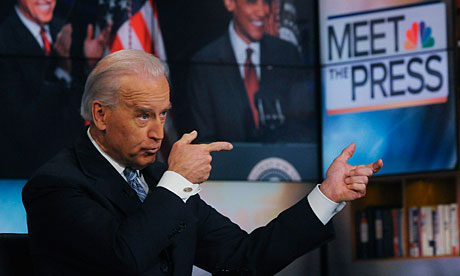
Julian Assange like a hi-tech terrorist, says Joe Biden


The US vice-president, Joe Biden, today likened the WikiLeaks founder, Julian Assange, to a "hi-tech terrorist", the strongest criticism yet from the Obama administration.

Biden claimed that by leaking diplomatic cables Assange had put lives at risk and made it more difficult for the US to conduct its business around the world.

His description of Assange shows a level of irritation that contrasts with more sanguine comments from other senior figures in the White House, who said the leak had not done serious damage.

Interviewed on NBC's Meet the Press, Biden was asked if the administration could prevent further leaks, as Assange warned last week. "We are looking at that right now. The justice department is taking a look at that," Biden said, without elaborating.

The justice department is struggling to find legislation with which to prosecute Assange.

Asked if what Assange had done was criminal, Biden seemed to suggest it would be considered criminal if it could be established that the WikiLeaks founder had encouraged or helped Bradley Manning, the US intelligence analyst suspected of being behind the leak. Biden claimed this was different from a journalist receiving leaked material.

"If he conspired to get these classified documents with a member of the US military that is fundamentally different than if someone drops on your lap … you are a press person, here is classified material."

Asked if he saw Assange as closer to a hi-tech terrorist than the whistleblower who released the Pentagon papers in the 1970s, which disclosed the lie on which US involvement in Vietnam was based, Biden replied: "I would argue it is closer to being a hi-tech terrorist than the Pentagon papers. But, look, this guy has done things that have damaged and put in jeopardy the lives and occupations of people in other parts of the world.

"He's made it more difficult for us to conduct our business with our allies and our friends. For example, in my meetings – you know I meet with most of these world leaders – there is a desire now to meet with me alone, rather than have staff in the room. It makes things more cumbersome – so it has done damage."

The interview, though broadcast yesterday, was conducted on Friday. In an interview the previous day, he had been more neutral about WikiLeaks, saying: "I don't think there's any substantive damage."

The US secretary of state, Hillary Clinton, led criticism of the WikiLeaks revelations at the end of November when she accused the website of mounting an "attack" on the world.


Read More

http://www.guardian.co.uk/media/2010/dec/19/assange-high-tech-terrorist-biden

Thursday, December 16, 2010

WikiLeaks's Assange walks free on bail in London


WikiLeaks founder Julian Assange, fighting extradition to Sweden over alleged sex crimes, walked free on bail from a British jail on Thursday protesting his innocence and pledging to continue exposing official secrets.

Assange spoke to a crowd of journalists and supporters waiting in outside the High Court in London five hours after a judge said he could be released on 200,000 pounds ($312,000) bail under stringent conditions.

"It's great to smell fresh air of London again," Assange, illuminated by a blizzard of photographers' flashes, said.

WikiLeaks has angered U.S. authorities by publishing hundreds of a trove of 250,000 U.S. diplomatic cables, including details of overseas installations that Washington regards as vital to its security.

Assange, wearing a dark suit and open-necked white shirt, brandished court papers titled "Swedish Judicial Authority vs Julian Paul Assange." He was then driven away in a four-wheel-drive vehicle.

The 39-year-old Australian later arrived at Ellingham Hall, in Suffolk eastern England, where he must live as a condition of his bail. He spoke to reporters at the mansion that belongs to a former army officer and Assange supporter, Vaughan Smith.

"I continue on with our work. Clearing my name is not the highest task I have. The highest task I have is to continue with my work."

Janice Game, 63, who lives opposite the Georgian house said she had come out to see reporters waiting in the snow for Assange to drive through the gates of the 650 acre estate.

"I do not think that Vaughan would have him at the house unless he believed completely that he was innocent."

Assange has spent nine days in a London jail after Sweden issued an arrest warrant for him over allegations of sexual misconduct made by two female WikiLeaks volunteers. Assange denies the accusations.

Assange told reporters soon after his release that he was more concerned the United States might try to extradite him than he was about being extradited to Sweden.

Assange and his lawyers have voiced fears that U.S. prosecutors might be preparing to indict him for espionage over WikiLeaks' publication of the documents.

"We have a rumor today from my lawyers in the United States, it's not confirmed yet, that there has been an indictment made against me in the United States," Assange said.

The New York Times said on Wednesday federal prosecutors were looking for evidence that he had conspired with a former U.S. Army intelligence analyst suspected of leaking classified documents.

Shortly before Assange's release, his mother Christine, who had flown over from Australia, said she could not wait to see her son and "to hold him close."


Read More

http://www.reuters.com/article/idUSL3E6N80HH20101217