Showing posts with label al qaeda. Show all posts

Thursday, June 16, 2011

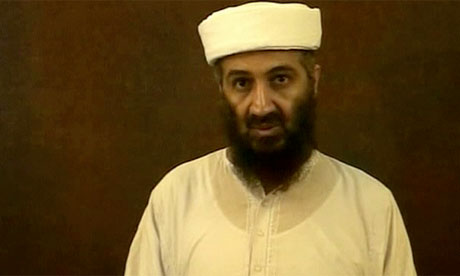
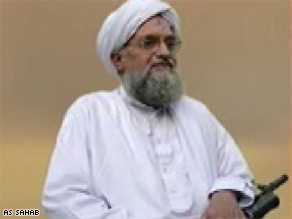
Al-Zawari becomes new al Qaeda leader


Al Qaeda has a new leader. That's according to a statement on an Islamist website published today. It says Ayman al-Zawari, Osama bin-Laden's long-time lieutenant, has now taken full command of the group's operations.

Zawari, who has long been viewed as bin-Laden's most likely successor, vowed earlier this month to press ahead with al-Qaeda's campaign against the US and its allies. It was his first public response to the U.S. commando raid in Pakistan last month, in which bin-Laden was killed.

Believed to be in his late 50s, Zawahri met bin-Laden in Pakistan in the mid-1980s, while helping guerrillas fight the Soviet troops in Afghanistan. He now tops Washington's most-wanted list, with a 25-million U.S.-dollar bounty.

Read More

http://news.xinhuanet.com/english2010/video/2011-06/17/c_13935432.htm

Wednesday, June 8, 2011

Al-Qaeda warns of US of Muslim rebellion


Osama bin Laden's longtime lieutenant, Ayman al-Zawahri, has warned the United States of a coming Muslim rebellion in retribution for the killing of the al Qaeda leader. The statement came in a video posted to a website on Wednesday.

In what appeared to be his first public response to bin Laden's death, the Egyptian-born Zawahri vowed to press ahead with al Qaeda's campaign against the US and its allies. He warned Americans not to rejoice at bin Laden's death, and condemned US forces for burying bin Laden at sea, a move opposed by senior Muslim clerics as un-Islamic. Zawahri also praised the citizen revolts in his native Egypt and other Arab countries, calling on Pakistanis to follow suit.

Read More

http://news.xinhuanet.com/english2010/video/2011-06/09/c_13919383.htm

Tuesday, May 24, 2011

Peter King: Al Qaeda will seek revenge for bin Laden killing

CBS News Congressional Correspondent Nancy Cordes spoke to House Homeland Security Chairman Pete King (R-N.Y.) today on the eve of the first congressional hearing examining security in the United States in the wake of Osama bin Laden's killing. "Al Qaeda is still deadly and right now in this immediate future al Qaeda I believe is going to seek revenge.

They're going to show that they are very much alive that they are capable of the attack. And I expect the attack, if it does happen, to come from within the United States," he said. King said he specifically worries about lone wolves who might be plotting an attack from within the United States. He added that he gives the President Obama full credit for killing Osama bin Laden, and that it was a great achievement, but that he is holding the hearing to keep make sure the public understands that the United States must still play defense against terrorism.

"My concern is that too many of the American people believe now the war is over, that al Qaeda has been dramatically weakened. They haven't been. In many ways the threat- at least in the short run- is greater now than at any time September 11th."

Read More http://www.cbsnews.com/8301-503544_162-20065868-503544.html

Thursday, May 19, 2011

Double bombing in Iraq kills 27, injures dozens


Reporting from Kirkuk, Iraq, and Baghdad—
A double bombing killed at least 27 people, almost all of them police officers, and wounded dozens in a parking lot outside the main police offices in the oil-rich city of Kirkuk in northern Iraq on Thursday, according to security officials.

The attack came after a car bombing early this month outside a police station in the southern city of Hillah that killed 16 people, including some officers, and a later failed jailbreak from Baghdad's Interior Ministry compound that left six police officers dead, including a counter-terrorism general.

Eight police officers were wounded when a roadside bomb targeted their convoy as they rushed to the scene in Kirkuk.

The spate of attacks and daring attempts to escape jail has put Iraq's forces under new scrutiny as the last of the U.S. troops prepare to leave the country at the end of the year. "This has the fingerprint of Al Qaeda," said Brig. Jamal Tahi, Kirkuk's police chief.

Read More

http://www.latimes.com/news/nationworld/world/la-fg-iraq-bombing-20110520,0,6719256.story

Wednesday, May 18, 2011

Osama bin Laden praises Arab spring in posthumously released tape


A tape recorded by Osama bin Laden before his death in an American special forces raid earlier this month has been posthumously released onto Islamic militant websites.

The message, recorded some time in the ten weeks before the 54-year-old al-Qaida leader was killed in Pakistan on May 2, praises the "Arab Spring" protest movements across the Middle East and predicts that revolutions will spread.

"I think that the winds of change will blow over the entire Muslim world, God willing," bin Laden said in the 12-minute message.

The message, though a video clip, contains only an audio track and an old photo of the terrorist leader, probably indicating that it was designed to be edited with images but that al-Qaida media technicians were either unable to do so or that a decision was taken to upload the tape quickly.

The senior al-Qaida leadership were caught out by the unrest in the Arab World this spring and had difficulty framing an effective response to an outpouring of enthusiasm for democracy and pluralism.

In deposing President Hosni Mubarak in Egypt and Zine el Abedine ben Ali in Tunisia, protestors achieved fundamental aims of al-Qaida itself without violence.

In the recording, Bin Laden accused rulers in the Middle East of building themselves into idols and manipulating the media to stay in power.

Al-Qaida figures have frequently blamed the media for the failure of the majority of Muslims to heed its call to arms.

"So, what are you waiting for?" Bin Laden asked in the most recent tape. "Save yourselves and your children, because the opportunity is here."

Bin Laden, who is thought to have been living in a three-storey house in the northern Pakistani town of Abbottabad for up to five years, spoke in high rhetorical language and avoided the more violent or apocalyptic language of many previous statements.

A full transcript of the tape is yet to be made available but bin Laden appears not to have threatened the West directly as has previously often been the case.

Read More

http://www.guardian.co.uk/world/2011/may/19/osama-bin-laden-tape-posthumous-arab-spring

Tuesday, May 17, 2011

Al-Qaida in the midst of fierce succession battle


A fierce succession battle appears to be gripping the senior ranks of al-Qaida in the wake of the death of leader Osama bin Laden earlier this month, pitting regional affiliates against the central "hardcore" of the organisation.

Reports from Pakistan named an Egyptian former special forces officer known as Saif al-Adel as the acting leader of al-Qaida.

Al-Adel, who is in his late 40s, is a veteran militant who was close to bin Laden in the 1990s before being detained in Iran after fleeing Afghanistan following the ouster of the Taliban in 2001. According to Noman Benotman, a former Libyan militant now living in London, al-Adel was released from Iranian detention and returned to Pakistan last year.

The report in the Pakistani The News newspaper identified al-Adel as having been chosen as "interim leader" of al-Qaida after a meeting at "an undisclosed location". It also said that "none of sons of Osama Bin Laden has shown willingness" to take up a formal position within the organisation.

One of the 54-year-old al-Qaida leader's adult sons, Khaled, was killed with his father in the raid on Abbottabad. Others have been groomed for leadership roles but are currently too young or too inexperienced to command any real support.

If confirmed, the appointment of al-Adel is a major blow to bin Laden's close associate Ayman al-Zawahiri, the Egyptian extremist strategist who has long been seen as the group's number two.

Al-Zawahiri is reported to have been given the important, and usually shortlived, role of director of external or international operations for the group. This would nonetheless be something of a demotion for a man who was bin Laden's closest associate and a major figure in his own right.

Read More

http://www.guardian.co.uk/world/2011/may/18/al-qaida-succession-battle-saif-al-adel-acting-leader

Thursday, May 5, 2011

US Intelligence: Al-Qaida Considered 9-11 Anniversary Attack


U.S. officials say an initial review of documents seized from Osama bin Laden's compound shows al-Qaida considered carrying out a terrorist plot against the United States on the 10th anniversary of the September 11 attacks.

A Homeland Security Department document obtained Thursday by U.S. news organizations says al-Qaida considered an operation against trains at an unspecified location in the United States.

The document says al-Qaida thought about tampering with rail tracks so a train would fall off the tracks in a valley or over bridge.

U.S. officials say they have no evidence the plot was active.

This information appears to be the first widely circulated intelligence stemming from the raid Sunday by an elite U.S. Navy SEAL team on bin Laden's compound in the Pakistani town of Abbottabad. In the raid, the Navy SEALs killed bin Laden and took documents and other valuable intelligence information.

Read More

http://www.voanews.com/english/news/usa/US-Intelligence-Al-Qaida-Considered-9-11-Anniversary-Attack-121361629.html

Monday, May 2, 2011

Osama bin Laden changed us in ways minute, monumental


Without him, there would probably be no Department of Homeland Security, no Patriot Act, no Qur’an-burning pastors.

Had Osama bin Laden never been born, there would surely be fewer memorials to slain firefighters, less need for prosthetic limbs for young troops, an American public still largely ignorant of the Muslim notion of martyrdom.

Our military probably would still be more interested in tanks and aircraft carriers, less wary of roadside bombs and suicide belts. The development of killer robot planes might not have come so far. The need to deal with asymmetric threats — battling an army not of battalions but of insurgents — would not be so pressing.

And America would certainly be a country with far fewer long-fading yellow ribbons.

The man who came to symbolize a bloody rejection of all things U.S. left a legacy among those he hated, and those he inspired to hate them. Little wonder that his demise brought so little sympathy.

“In the past few years, (bin Laden’s) main military triumphs have been against such targets as Afghan schoolgirls, Shiite Muslim civilians, and defenseless synagogues in Tunisia and Turkey,” wrote pundit Christopher Hitchens on news of bin Laden’s death and dumping at sea. “Has there ever been a more contemptible leader from behind, or a commander who authorized more blanket death sentences on bystanders?”

In ways small and monumental, bin Laden’s two decades on the world stage changed how America operated within its borders and with other nations. It may not have been entirely his doing, but his life had a profound impact on the nation he so loathed.

It was after he mobilized al-Qaida against the United States, after all, that Washington set up the legal purgatory of Guantanamo Bay for foreign fighters. Since then, the country tormented itself over whether waterboarding is torture and whether torture is always a bad idea.

As fate would have it, the first bits of intelligence that ultimately tracked down bin Laden came from secret prisons overseas. That won’t end the torture debate, but it looks to have ended bin Laden’s run.

Current and former U.S. officials told The Associated Press that Khalid Sheikh Mohammed, the chief planner of the Sept. 11, 2001, terrorist attacks, provided the pseudonym of a bin Laden courier. The CIA also got tips from Mohammed’s successor, Abu Faraj al-Libi. Both men underwent harsh interrogation at CIA prisons in Poland and Romania.

It was, in a way, the nature of bin Laden’s tactics that prompted America to bend its own ways.

Bin Laden no more invented the suicide bomber than Henry Ford invented the automobile. He just made more of them than anyone had before.

Under his leadership, al-Qaida shifted the rationalization behind suicide bombings. The ultimate attacks of 9/11 weren’t done with bombs, but they fit with a devolved sense of justifications for killing. No longer did a man with an explosive vest need to aim for Israeli soldiers or some other combatants. Now, went the reasoning sold by bin Laden’s organization, truck bombs could target civilians as long as the victims could be painted as somehow sympathetic to Islam’s supposed enemies.

“They built this narrative that Muslims are being besieged and humiliated and targeted by the West in wars and occupation,” said Mohammed M. Hafez, an associate professor at the Naval Post Graduate School who has researched suicide bombers. “They elevated martyrdom in online documents and videos. … They’ve really taken the art of martyrdom veneration to a new level.”

Impact on politics

Bin Laden’s more lethal brand of terrorism changed, too, the dynamics of American politics.

George W. Bush arguably would have had a harder time at re-election in 2004 were he not, as he put it, “a war president.”

Barack Obama’s re-election prospects — had he ever made it to the White House — might look bleaker now had troops on his watch not slain the face of terrorism.

And the hope that bin Laden’s 9/11 terrorist attacks might unite a polarized U.S. turned out to be fleeting at best.


Read more:
http://www.kansascity.com/2011/05/02/2844626/osama-bin-laden-changed-us-in.html#ixzz1LGFH9sU3

Monday, April 25, 2011

WikiLeaks: al Qaeda watched towers burn


Khalid Sheikh Mohammed, the 9/11 plot mastermind for al Qaeda, was in Pakistan, watching the attacks on television. according to WikiLeaks documents.

Each of us remembers where we were on September 11, 2001, but we never knew what the masterminds of al Qaeda's terrorist plot were doing that terrible day.

Now, we have an answer, as found in more than 700 documents from the U.S. military prison at Guantanamo Bay, and just published by WikiLeaks.

As it turns out, while Americans watched in horror as the twin towers burned, al Qaeda's top leaders were watching, too. CBS News correspondent David Martin reports that Khalid Sheik Mohammed, the plot mastermind, was in Karachi, Pakistan, watching on television with Ramsi bin al Shib, the day-to-day coordinator of the operation.

"After the success of the attacks, the operatives prostrated themselves and gave thanks to Allah," one document says.

Abd al Rahim al Nashiri, who engineered the bombing of the USS Cole, couldn't be there. He was in a Karachi hospital after having had his tonsils out. Nashiri may have been the most dedicated terrorist of all. "He reportedly received injections to promote impotence (rather than be distracted by women)," a document says.

The documents, based on the interrogation of prisoners at Guantanamo Bay, say after 9/11, all senior operatives left Pakistan for Afghanistan to meet with Osama bin Laden, who had watched the attacks from Kandahar.

Bin Laden and his deputy, Ayman al Zawahiri, spent the next couple of months moving about Afghanistan by car, finally taking refuge in the Tora Bora mountains. In mid-December 2001, the two disappeared across the border into Pakistan. The others were eventually captured, but not before Bin al Shib threatened to slit his own throat rather than be taken alive.

Of course, one should not believe everything a captured terrorist says. One sensational but unconfirmed claim found in the documents says al Qaeda had a nuclear bomb it would set off if Bin Laden were ever captured.

Read More

http://www.cbsnews.com/stories/2011/04/25/eveningnews/main20057231.shtml?tag=cbsnewsTwoColUpperPromoArea


Tuesday, January 18, 2011

Iraqi Police Recruits Are Killed by Bomber


BAGHDAD—A suicide bomber killed at least 49 people and wounded dozens at an Iraqi police building in the city of Tikrit, north of Baghdad, bringing an end to the period of relative calm that has prevailed since a new national unity government was formed last month.

The bomber struck in the early morning when hundreds of applicants had gathered outside police headquarters on the second day of a recruitment drive, according to officials in the local government in Salaheddin province, whose seat is Tikrit.

The applicants had congregated in an open space cordoned off with concertina wire and were being led into the police station building, which is barricaded with tall blast walls, in groups of 40 after a body search, according to police Col. Wahab Hamid. He said the bomber probably managed to infiltrate the crowd by posing as a recruit.

"I predict the al Qaeda network and outside parties are behind this attack to prevent the sons of the province from joining the police force," said Raad Mohammed, a spokesman for the local government., without being more specific.

Suicide bombings against crowds gathered for coveted jobs in the Iraqi forces were frequent after the U.S.-led invasion in 2003. The attacks, which are often seen as trademarks of al Qaeda-linked groups, have persisted even as overall levels of violence have fallen sharply in recent years.

In August a suicide bomber blew himself up amid a group of Iraqi army recruits in Baghdad, killing almost 60.

Col. Hamid said he was driving out of the Tikrit police building, but was still behind the blast walls when the bomber struck outside. "Bodies were tossed all over the place," said Col. Hamid, who spoke by phone from Tikrit after he was treated at the local hospital for his wounds.

The Tikrit Teaching Hospital was overwhelmed with casualties that reached at least 49 dead and 150 wounded, according to Mohammed Ayash, a medic in the ER unit.

Read More

http://online.wsj.com/article/SB10001424052748703954004576089311511873304.html


Monday, December 6, 2010

US drone attack kills five 'militants' in Pakistan


Five suspected militants have died in a US drone strike in north-western Pakistan, Pakistani officials say.

They say the missiles, fired from a pilotless US aircraft, struck a vehicle and a building in the North Waziristan tribal region near the Afghan border.

The lawless region, a haven for members of the Taliban and al-Qaeda, has been repeatedly targeted by US drones.

There have been more than 100 such attacks throughout 2010, nearly all of which have hit North Waziristan.

Muslim extremists are believed to run a virtual mini-state in the area, outside the Pakistani government's control.

Monday's drone attack happened in the Khysor area of North Waziristan, reports said.

Pakistan publicly criticises drone attacks, saying they fuel support for militants. But observers say officials privately condone the strikes.

The US military and the CIA do not routinely confirm that they have launched drone operations, but analysts say only American forces have deployed such aircraft in the region.

Read More

http://www.bbc.co.uk/news/world-south-asia-11933649

Sunday, November 21, 2010

Al-Qaeda affiliate threatens more small-scale bomb attacks


Al-Qaeda is threatening to launch a wave of small-scale attacks similar to the recent failed parcel bomb plot, which the terrorist group describes as a low-budget operation that caused fear and costly countermeasures in the West.

The new threat was published Saturday in the latest issue of the group's English-language magazine, Inspire. The online magazine, published by al-Qaeda's affiliate in Yemen, features glossy photographs of UPS delivery vehicles and asserts that the group spent just $4,200 on a plot aimed at blowing up cargo aircraft headed for the United States.

"We will continue with similar operations and we do not mind at all in this stage if they are intercepted," one article said. "It is such a good bargain for us to spread fear amongst the enemy . . . in exchange for a few months of work and a few thousand bucks."

The publication represents a new propaganda ploy for al-Qaeda, marking the first time that that the terrorist organization has provided such a detailed description of its planning in the aftermath of an attack.

Al-Qaeda in the Arabian Peninsula, or AQAP, as the Yemen-based arm is known, has emerged as a top concern of counterterrorism officials over the past two years, in part because of its willingness to experiment with small-scale plots.

The United States has recently begun employing Predator drones in Yemen in an expanding hunt for AQAP leaders, include Anwar al-Aulaqi, a Muslim cleric who was born in the United States.

The package bomb plot was thwarted late last month when authorities in the United Kingdom and Dubai - acting on an intelligence tip from Saudi Arabia - intercepted two parcels that had been mailed from Yemen containing ordinary printer cartridges packed with the explosive compound PETN.


Authorities have said the parcels made it past cargo screening systems and contained enough explosives to bring down a plane. The parcels were sent to addresses for Jewish institutions in Chicago but appeared to have been designed to detonate in transit.

Al-Qaeda's core group in Pakistan has traditionally focused on staging elaborate, simultaneous attacks on multiple targets - a preoccupation with the spectacular that made the plots more difficult to execute and easier to detect.

The parcel bomb attempt was aimed at a familiar Al-Qaeda target: aviation. But AQAP has embraced a philosophy of probing for vulnerabilities with plots that are more streamlined and more frequent.

The magazine refers to the parcel bomb plot as "operation hemorrhage" and asserts that its main objective was to damage the multibillion-dollar air freight industry and trigger a costly security response.

Taking down a plane "would add to the element of fear and shock," according to one article, "but that would have been an additional advantage . . . not a determining factor of its success."

In the same article, AQAP itemizes the plot's ingredients: "Two Nokia mobiles, $150 each, two HP printers, $300 each, plus shipping, transportation and other miscellaneous expenses."

The cover of the magazine shows the sum $4,200 over the blurred image of a cargo jet. Inside, authors warn that they intend to share details of how to construct their device with followers in countries where mail-screening systems have not caught up.

The magazine offers explanations for some of the decisions involved in the plot. The names in the addresses were drawn from historical figures associated with the Crusades and attacks on Muslims. The packages were sent to synagogues in Chicago, "Obama's city."

The magazine also includes photos of the printers that were shipped, as well as a Charles Dickens novel, "Great Expectations," that was packed in one of the boxes to reflect the group's optimism "about the outcome of this operation."

Read More

http://www.washingtonpost.com/wp-dyn/content/article/2010/11/21/AR2010112103908.html

Sunday, November 14, 2010

We are against attack on Hajj pilgrims: Al-Qaeda


Riyadh : The terrorist group al-Qaeda said in a statement that it is against attacks targeting Hajj pilgrims in Mecca, after Saudi Arabian officials expressed fears of such attacks.


AQAP, the Al-Qaeda branch in Yemen on Sunday, Nov 14 posted a statement on internet saying that they are against the attacks on Hajj pilgrims.


"We assure our Islamic nation that we are against any criminal action aimed at the pilgrims," AQAP said in the statement.

Earlier on Saturday, Nov 13 Saudi Interior Minister Prince Nayef bin Abdul Aziz expressed the possibility of al-Qaeda attack on pilgrims.

"We cannot trust them. We do not rule out any attempt to disturb the security of the Hajj. We are ready for any act that might take place. God willing, nothing of that will happen, out of respect to this rite," Prince Nayef bin Abdul Aziz said.

The Hajj pilgrimage for the year 2010 will start on Monday, Nov 15.

Read More

Wednesday, November 3, 2010

All Christians 'targets,' Iraqi militant group says

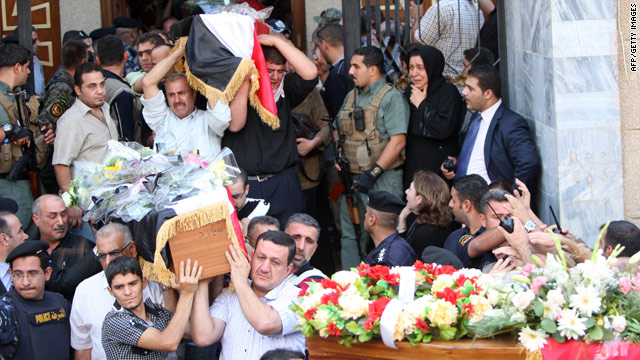
Iraqi Christians bury victims Tuesday of a church attack on October 31, for which the Islamic State of Iraq claimed responsibility.

Baghdad, Iraq-- All Christians in the Middle East are now "legitimate targets," al Qaeda in Iraq announced Wednesday, as the group's deadline for Egypt's Coptic church to release alleged Muslim female prisoners expired.

An audio message released Monday gave the church 48 hours to disclose the status of Muslim women it said are imprisoned in Coptic churches in Egypt.

The message purportedly came from the Islamic State of Iraq, which claimed responsibility for an attack on a Baghdad church Sunday that killed 58 people and wounded 75. The umbrella group includes a number of Sunni extremist organizations and has ties to al Qaeda in Iraq.

The group said the women's alleged plight was the reason it stormed the church.

Wednesday, the group released a new message saying, "The Ministry of War of Islamic State of Iraq declares that all the centers, organizations and bodies of Christian leaders and followers have become legitimate targets by the Mujahedeens, wherever our hands will reach them."

Shortly after the message was released, Egyptian police sources confirmed that security has been reinforced at churches around the country.

Additional protection was also being provided to the head of the Coptic Church, Pope Shenouda III, who is scheduled to give a sermon in Cairo in the evening, according to a police spokesman who could not be named in line with policy.

Copts are adherents of an Egyptian sect of Christianity. About nine percent of Egyptians are Coptic, according to the Central Intelligence Agency World Factbook; 90 percent of Egyptians are Muslim.
"This is a matter of extreme seriousness and we should not underestimate the threat," said Yusif Sidhom, editor-in-chief of Watani, a weekly Coptic newspaper published in Cairo. "We have to keep our eyes wide open and take all measures to ensure that our buildings and churches are not infiltrated."

Sidhom said he was encouraged by the security measures taken by the Egyptian government, as well as by the position taken by political forces in Egypt, including the Muslim Brotherhood, which has condemned the attack on the church in Baghdad and condemned threats against Egyptian Copts.

Worshippers at the Sayidat al-Nejat church in Baghdad were about to begin Sunday night services when gunmen entered the church, according to Martin Chulov, a journalist for Britain's Guardian newspaper, who was at the scene.

As many as 120 people were taken hostage, said Lt. Col. Eric Bloom, a U.S. military spokesman. The gunmen held them for hours before security forces stormed in to end the standoff, arresting eight suspects.
Most of the hostages were killed or wounded when the attackers set off explosives inside the church, Iraqi Defense Minister Abdul Qader Obeidi said.

At least two of the attackers were wearing explosive vests, which they detonated just minutes before security forces raided the church, police officials said.

The gunmen were demanding that the Iraqi government release a number of detainees and prisoners in Iraqi prisons, saying the Christian hostages would be freed in return, according to the police officials. Iraq's defense minister later said on state television that the kidnappers had demanded the release of a number of prisoners in both Iraq and Egypt.

"The sword of slaughter will not be lifted off the necks of their followers until they denounce what the dog of the Egyptian church has committed, and until they show the Mujahedeens their serious endeavor to pressure the combatant (Coptic) church for the release of our Muslim sisters, who are captive in the prisons of their monateries," the militant group said Wednesday.

The group's claim that the Coptic Church in Egypt is holding female prisoners is based on widespread rumors of Coptic women in Egypt converting to Islam and being detained by the church in an attempt to compel or persuade them to return to their original faith.

Both the Egyptian Interior Ministry and the representatives of the Coptic Church in Cairo declined to comment on the matter.
Monday, November 1, 2010

37 hostages killed in church drama, Baghdad


Thirty-seven people taken hostage by militants in a Baghdad church were killed and 56 wounded in a drama that was ended when US and Iraqi forces stormed the building, a government official said on Monday. "The latest toll is that 37 of the hostages were killed and 56 wounded," an Iraqi interior ministry official said after Sunday's attack on the church, claimed by an Al-Qaeda group.

He said that seven security forces personnel also were killed and 15 wounded, but did not specify if any were Americans.

Five attackers were killed and eight arrested, he said, adding there had been more than 100 worshippers at the Sayidat al-Nejat church in central Baghdad when the hostage-takers stormed in.

The SITE monitoring group said that Al-Qaeda group The Islamic State of Iraq claimed its fighters were behind the attack.