Showing posts with label japan disaster. Show all posts

Thursday, June 23, 2011

Lady Gaga urges fans to visit Japan


The flamboyant pop star, in Tokyo this week for a benefit concert for tsunami victims, said yesterday she is making a point to get out and enjoy the city and its food, and that her fans should do the same thing.

"I can't say enough to people all over the world that the majority of Japan right now, Japan in general, is very safe," she said.

"It's fine to come here. It's beautiful."

Many performers and athletes have cancelled appearances in Japan after the March 11 earthquake and tsunami that caused widespread destruction and set off a crisis at the Fukushima nuclear power plant about 220 kilometres north of Tokyo.

Tens of thousands of people were forced to leave homes near the plant because of the radiation danger, but even far from the evacuation zone, Japanese tourism has suffered because of the disaster.

Lady Gaga said she couldn't wait for the chance to show her support.

"The most important thing, and the best thing, we could do for Japan right now is to boost tourism, and so everyone come to Japan and come enjoy the beautiful country," she said.

The singer received a certificate from the commissioner of the Japan Tourism Agency yesterday thanking her for her support and money-raising efforts.

Lady Gaga will appear at MTV Video Music Aid Japan on Saturday and move on to Taiwan on July 1.

Read More

http://www.heraldsun.com.au/entertainment/music/gaga-urges-fans-to-visit-japan/story-e6frf9hf-1226081389515

Monday, June 6, 2011

Japan admits twice as much radiation released


ELEANOR HALL: To Japan now where nearly three months after the earthquake, tsunami and nuclear disaster, Japan's nuclear authority has dramatically revised up its estimates of the amount of radiation emitted from the Fukushima nuclear plants in the week after the earthquake.

In a statement overnight, the Nuclear and Industrial Safety Agency more than doubled its original estimate of the radiation in the atmosphere.

Plutonium has also been found for the first time in soil just a few kilometres from the plant. Tests have confirmed the plutonium came from the plant, but researchers say the levels are not a cause for alarm.

A short time ago I spoke to Tokyo correspondent Mark Willacy.

ELEANOR HALL: Mark this is an extraordinary admission from Japan's nuclear safety agency isn't it, that the earlier estimates of the danger were out by more than 100 per cent?

MARK WILLACY: Well the safety agency says that it was taking on board figures that were provided to it by TEPCO because they're based on basically water injection assumptions. Now that's quite technical but that water was pumped in to try and stop the meltdown - as we know now there were partial meltdowns in three of the reactors.

Now the nuclear safety agency is saying it's pushing up - it's doubling the amount of radiation released in the week after the crisis. It's more than doubling it to 770,000 terabecquerels. Now that probably doesn't mean much to people but it is quite a lot of radiation escaping into the atmosphere.

Read More

http://www.abc.net.au/worldtoday/content/2011/s3237652.htm

Sunday, April 24, 2011

Japan launches massive search for tsunami bodies


TAGAJO, Japan (AP) — Some 25,000 Japanese troops are fanning out on the wreckage-strewn northeastern coast Monday in a massive search for thousands of bodies still missing from last month's earthquake and tsunami.

Backed by dozens of boats and aircraft, the soldiers are scouring the region for remains swept to sea or buried under masses of rubble.

The operation is the third intensive military search for bodies since the disaster that killed up to 26,000 people. Some 12,000 remain missing and are believed dead. Monday's search is an all-out effort to recover any remains for their families.

The soldiers are combing through the rubble and navy boats and divers are searching the waters up to 12 miles (20 kilometers) off the coast.

Read More

http://www.google.com/hostednews/ap/article/ALeqM5hKSa_f4B-YmqkNFTir81z0iPuDYw?docId=2d89252c0ac4494599fef88ae276458d&index=0

Thursday, April 21, 2011

Japan earmarks first $50 billion for post-quake rebuild


Wakana Kumagai, 6, waits for her mother Yoshiko after visiting the grave of her father, who was killed by the March 11 tsunami

Japan's cabinet approved on Friday almost $50 billion of spending for post-earthquake rebuilding, a downpayment on the country's biggest public works effort in six decades.

The emergency budget of 4 trillion yen ($48.5 billion), which is likely be followed by more reconstruction spending packages, is still dwarfed by the overall cost of damages caused by the March 11 earthquake and tsunami, estimated at $300 billion.

"With this budget, we are taking one step forward toward reconstruction ... and toward restarting the economy," Finance Minister Yoshihiko Noda told reporters after a cabinet meeting.

The magnitude 9.0 earthquake and 15 meter tsunami that followed caused Japan's gravest crisis since World War Two, killing up to 28,000 people and destroying tens of thousands of homes.

It also smashed a nuclear power plant which began leaking radiation, a situation the plant's operator says could take all year to bring under control.

Read More

http://www.reuters.com/article/2011/04/22/us-japan-idUSTRE72A0SS20110422

Wednesday, April 20, 2011

Japan bans entry into Fukushima evacuation zone


Japan has made it illegal to enter a 20km (12-mile) evacuation zone around the stricken Fukushima nuclear reactor.

People were urged to leave the area shortly after the 11 March earthquake and tsunami crippled the plant, but the order was not enforced by law.

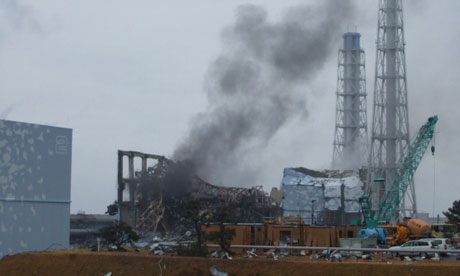
Cooling systems were knocked out by the twin disasters and radiation has been leaking from the plant.

Brief re-entry will be allowed to the area's 80,000 former residents to collect belongings.

It is not clear how many people are living in the evacuation zone, but reports said police had counted at least 60 families.

After the disaster the government also declared a wider 10km zone around the 20km evacuation area where people should either stay indoors or leave.

It later recommended that people also evacuate that area as well.

"The plant has not been stable," said chief government spokesman Yukio Edano.

"We have been asking residents not to enter the area as there is a huge risk to their safety," he said. "Unfortunately, there are still some people in the areas."

"Today... we have decided to designate the area an emergency area based on disaster law."

Long wait

Most of the evacuees are living in sports hall and gymnasiums waiting to return home.

It could be a long wait, says the BBC's Roland Buerk in Tokyo, as the plant's operator, Tokyo Electric Power Co (Tepco), has said it aims to bring the reactors to a cold shutdown within nine months.

The evacuation zone will be reassessed then, adds our correspondent.

Residents would be allowed supervised visits of two hours to collect belongings, which would be screened for radiation contamination.

Workers at the Fukushima Daiichi plant are attempting to remove highly radioactive water from a reactor building to allow repair work to the cooling systems knocked out on 11 March.

Emergency workers have been unable to enter any of the damaged reactor buildings at the plant since then.

Nearly 14,000 people have been confirmed to have died in the earthquake and tsunami and more than 13,000 people are missing.

Read More

http://www.bbc.co.uk/news/world-asia-pacific-13153339

Sunday, April 17, 2011

Eerie Hush Descends on Japan's Nuclear Zone


FUTABA, Japan—In the Coin Laundry, a dryer is still loaded with clothes: an orange hooded sweatshirt, a green worker's vest and two pairs of jeans, damp and smelling of mildew.

At Joe's Man restaurant near the train station, a menu lists the lunch specials, starting with bacon-and-eggplant pasta in a tomato-cream sauce. A flyer on the open doors of the Nishio clothes shop promotes a five-day "inventory clearance" sale. Over the road that runs through the town center, a white-and-blue sign proclaims: "Understanding Nuclear Power Correctly Will Lead to an Abundant Life."

But life, by and large, is what is absent in this town, just a few miles away from the troubled Fukushima Daiichi nuclear plant.

Futaba, once home to 7,000 residents, is one of eight towns forced to evacuate the day after the March 11 earthquake and tsunami damaged the nuclear plant. In the following days, tens of thousands of residents living within 12 miles of the damaged reactors fled. Last Monday, the Japanese government expanded the mandatory evacuation zone to encompass more towns.

On Sunday, the nuclear complex's operator, Tokyo Electric Power Co., said it aims to get the crippled plant under control with a so-called cold shutdown that brings down pressure and temperatures inside the reactors in six to nine months. Japan Trade Minister Banri Kaieda said some of the evacuees may be able to return after that but acknowledged it wouldn't be possible for all of them to come back then.

Futaba Mayor Katsutaka Idogawa, meanwhile, said it will be "years" before the residents of his town can return. The utility on Friday said it would begin initial compensation payments of up to ¥1 million, or about $12,000, to residents from an 18-mile zone around the plant—an offer some evacuees called an insufficient, short-term sop.

Police have established road blocks on Route 6, the main surface road running north and south through the zone. Authorities have declared evacuation mandatory for the area up to 12 miles from the plant and advised people who are six miles beyond that to stay inside. Police cars, ambulances or fire trucks occasionally patrol the towns inside the mandatory zone. While it isn't illegal to enter the area, it's strongly discouraged.

"What are you doing here?" a fireman asked a reporter walking in the street. From the passenger seat, another firefighter held up a radiation monitor. "You are not supposed to be here. It's dangerous," he said. "Please leave soon."

Some locals are evading the road blocks, traveling into the area by narrow side streets to gather possessions—confronting the possibility of never returning to live in Futaba.

On Thursday, a woman who identified herself as Ms. Takasaki rushed in and out of a beautiful, traditional Japanese home. She said her family is living with relatives in Fukushima City, about 60 miles inland. She had traveled to Futaba with her husband, daughter and father-in-law to pack as many of their possessions as they could in 30 minutes.

She wore a clear rain poncho, a face mask and sunglasses. Her shoes were covered with clear plastic bags, taped around her ankles.

"We're in a big hurry," she said as she carried boxes of clothes to the open trunk of a sedan, handing a stranger an armful of winter coats to carry to the car. "But since this is probably the last time we'll come back here, there are things we needed to get."

Read More

http://online.wsj.com/article/SB10001424052748703648304576264434143952142.html

Tuesday, April 5, 2011

Japan Nuclear Plant Plugs Highly Radioactive Leak


Workers at Japan's tsunami-damaged nuclear power plant on Wednesday finally halted a leak that was sending a tide of radioactive water into the Pacific and exacerbating concerns over the safety of seafood, the operator said.

It was a rare bit of good news for the Fukushima Dai-ichi complex and the coastal areas surrounding it, where high levels of seawater contamination have angered fishermen and prompted the government to set limits for the first time on the amount of radiation permitted in fish.

But in a sign that workers still face several challenges before the overheating reactors are stabilized, Tokyo Electric Power Co. said it plans to inject nitrogen gas into one of the reactors. Nitrogen can prevent highly combustible hydrogen from exploding — as it did three times at the compound in the early days of the crisis.

There is no immediate possibility of an explosion, but the "nitrogen injection is being considered as a cautionary measure," said spokesman Hidehiko Nishiyama of Japan's Nuclear and Industrial Safety Agency.

TEPCO said the process could begin as early as Wednesday evening in Unit 1 — where pressure and temperatures are the highest — according to spokesman Junichi Matsumoto. The same measures will eventually be taken at the other two troubled reactors.

The 9.0-magnitude earthquake and tsunami that followed are believed to have killed as many as 25,000 people. Hundreds of miles (kilometers) of coastline have been destroyed and the country's fishing industry devastated.

Since the crush of water flooded the plant and knocked out cooling systems, workers there have been desperately trying to cool overheated reactors. The effort has required spraying large amounts of water and allowing it to gush out wherever it can escape, sometimes into the sea.

While officials have said the crack in a maintenance pit plugged early Wednesday was the only one found, they have not explicitly ruled out that radioactive water is leaking into the sea from another point.


Read More

http://abcnews.go.com/Business/wireStory?id=13305742

Wednesday, March 30, 2011

Japan says battle to save nuclear reactors has failed


Japanese officials have conceded that the battle to salvage four crippled reactors at the Fukushima Daiichi power plant has been lost.

The plant's operator, Tokyo Electric Power [Tepco], said the reactors would be scrapped, and warned that the operation to contain the nuclear crisis, now well into its third week, could last months.

Tepco's announcement came as new readings showed a dramatic increase in radioactive contamination in the sea near the atomic complex.

The firm's chairman, Tsunehisa Katsumata, said it had "no choice" but to scrap the Nos 1-4 reactors, but held out hope that the remaining two could continue to operate. It is the first time the company has conceded that the at least part of the plant will have to be decommissioned.

But the government's chief spokesman, Yukio Edano, repeated an earlier call for all six reactors at the 40-year-old plant to be decommissioned. "It is very clear looking at the social circumstances," he said.

Tens of thousands of people living near the plants have been evacuated or ordered to stay indoors, while the plant has leaked radioactive materials in to the sea, soil and air.

On Thursday, the International Atomic Energy Agency [IAEA] suggested widening the 30-kilometre exclusion zone around the plant after finding that radiation levels at a village 40 kilometres from the plant exceeded the criteria for evacuation.

"We have advised [Japanese officials] to carefully assess the situation, and they have indicated that it is already under assessment," Denis Flory, a deputy director of the IAEA, said.

The French president, Nicolas Sarkozy, was due to arrive in Tokyo on Thursday to show support for the Fukushima operation and for talks with his Japanese counterpart, Naoto Kan. Sarkozy, the current G8 chair, is the first foreign leader to visit Japan since the 11 March earthquake and tsunami.

An emotional Kastumata apologised for the anxiety the crisis has caused.

Read More

http://www.guardian.co.uk/world/2011/mar/31/japan-battle-save-nuclear-reactors-failed

Wednesday, March 23, 2011

New Problems at Japanese Plant Subdue Optimism


The Japanese electricians who bravely strung wires this week to all six reactor buildings at a stricken nuclear power plant succeeded despite waves of heat and blasts of radioactive steam.

The restoration of electricity at the plant, the Fukushima Daiichi Nuclear Power Station, stirred hopes that the crisis was ebbing. But nuclear engineers say some of the most difficult and dangerous tasks are still ahead — and time is not necessarily on the side of the repair teams.

The tasks include manually draining hundreds of gallons of radioactive water and venting radioactive gas from the pumps and piping of the emergency cooling systems, which are located diagonally underneath the overheated reactor vessels. The urgency of halting the spread of radioactive contamination from the site was underlined on Wednesday by the health warning that infants should not drink tap water — even in Tokyo, 140 miles southwest of the stricken plant — raised alarms about extensive contamination.

“We’ve got at least 10 days to two weeks of potential drama before you can declare the accident over,” said Michael Friedlander, who worked as a nuclear plant operator for 13 years.

Nuclear engineers have become increasingly concerned about a separate problem that may be putting pressure on the Japanese technicians to work faster: salt buildup inside the reactors, which could cause them to heat up more and, in the worst case, cause the uranium to melt, releasing a range of radioactive material.

“A meltdown is looking less likely, but a lot of radiation has been released in the reactor buildings and may continue to seep out,” said a Western nuclear power executive who asked not to be quoted by name because he did not want to risk his broad contacts in Japan. “What we might have is a slow-moving contamination problem rather than a fast-moving contamination problem.”

Read More

http://www.nytimes.com/2011/03/24/world/asia/24nuclear.html?partner=rss&emc=rss