Showing posts with label usa economy. Show all posts

Monday, March 14, 2011

U.S. millionaires say $7 mln not enough to be rich


A million dollars ain't what it used to be.

More than four out of ten American millionaires say they do not feel rich. Indeed many would need to have at least $7.5 million in order to feel they were truly rich, according to a Fidelity Investments survey.

Some 42 percent of the more than 1,000 millionaires surveyed by Fidelity said they did not feel wealthy. Respondents had at least $1 million in investable assets, excluding any real estate or retirement accounts.

"Every person in the survey is wealthy," said Sanjiv Mirchandani, president of National Financial, a unit of Fidelity. "But they are still worried about outliving their assets."

The average age of respondents was 56 years old with a mean of $3.5 million of investable assets. The threshold for "rich" rose with age.

"They compare themselves to their peer group ... and they are also thinking about the long period they will have in retirement and want more assets" to fund their lifestyle, said Michael Durbin, president of Fidelity Institutional Wealth Services.

Still, millionaires are slightly more optimistic now than they were in 2009, when 46 percent did not feel wealthy.

Respondents were also more optimistic about the U.S. economy. While they thought the current U.S. economy remained very weak, they think it will improve by the end of this year.

Fidelity noted the wealthiest 5 percent of Americans hold more than 55 percent of the nation's wealth.

Read More

http://www.reuters.com/article/2011/03/14/uk-fidelity-survey-idUSLNE72D03820110314

Friday, March 4, 2011

U.S. jobless rate falls to 8.9%, California's dips


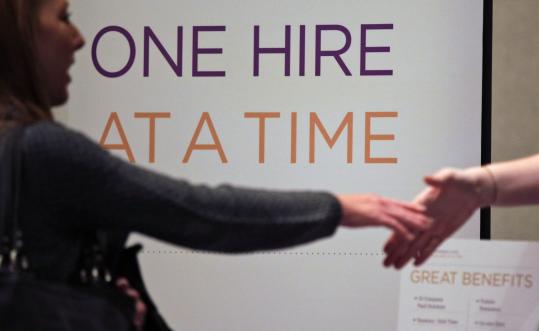
A man checks job listings in New York. U.S. employers have added 192,000 jobs


The U.S. jobless rate unexpectedly fell to 8.9 percent, the lowest in almost two years, and employers added 192,000 jobs in a sign of growing confidence in the recovery, the Labor Department reported Friday.

Meanwhile, California's unemployment rate dipped slightly to 12.4 percent in January, the state Employment Development Department said.

The state reported a 12.5 percent unemployment rate in December. California's jobless rate has been at or above 12 percent for 17 months.

California added 12,500 nonfarm jobs in January, bringing the state's total to nearly 14 million. Gains were seen in five of 11 sectors surveyed, including construction, manufacturing and government. Education and financial, health and business services reported job losses.

Even with the slight drop in the unemployment rate, more than 2.2 million Californians remain out of work.

The nationwide increase in payrolls partly reflected a return to more seasonable weather and followed a 63,000 gain in January, Labor Department figures showed. The median estimate in a Bloomberg News survey of economists was for an addition of 196,000 jobs last month.

Manufacturing, construction and transportation were among industries adding workers, underscoring Federal Reserve Chairman Ben Bernanke's testimony to Congress this week that there are "grounds for optimism" about improvements in the labor market. Employment growth is giving Americans the means to keep spending at retailers such as J.C. Penney Co. and Macy's Inc.

"The economy has been clawing its way back up the side of the mountain for the better part of a year and these numbers are consistent with that," Paul O'Neill, a special adviser to Blackstone Group LP and a former Treasury secretary, said in an interview with Bloomberg Television. "Where we are is the process of natural healing of our economy."

The unemployment rate was projected to rise to 9.1 percent from 9 percent, according to the survey median. The number of unemployed fell by 190,000, and those employed rose by 250,000. The size of the labor force increased by 60,000.

Some U.S. companies are ramping up hiring. Intel Corp. in Santa Clara and Home Depot Inc. announced plans last month to hire thousands of workers.

President Obama last week told the first meeting of his panel of outside economic advisers that the United States must deal with stubbornly high unemployment even as the recovery is well under way.

"We still have a ways to go," Labor Secretary Hilda Solis said in an interview Friday with Bloomberg Television. "We still have a lot of people who need jobs."

Last month's increase in payrolls was the biggest since May. If sustained, that pace would reduce the unemployment rate to 6.9 percent by November 2012, when Obama faces re-election, said Guy LeBas, chief fixed-income strategist at Janney Montgomery Scott LLC. The rate was 7.8 percent when Obama took office in January 2009.

Read more:

http://www.sfgate.com/cgi-bin/article.cgi?f=/c/a/2011/03/04/BU3G1I48UC.DTL#ixzz1FhQJPoyd

Friday, January 21, 2011

Bank of America: Probably Still Screwed

Getty Images

Brian Moynihan looked and sounded confident this morning as he closed out his first year as President and CEO of Bank of America.

This is quite a feat considering that Bank of America [BAC 14.25 -0.29 (-1.99%) ] posted a fourth-quarter net loss of $1.24 billion, or 16 cents a share. Analysts had expected the bank to earn 14 cents a share.

Revenue, which analysts had predicted would come in at $25 billion, was down 11% to just $22.7 billion. The $3 billion mortgage repurchase provision Bank of America announced just 3 weeks ago has grown to $4.1 billion. The bank took an additional $2 billion charge on the declining value of Countrywide.

Bank of America is trying to sell the market on the idea that last quarter—in fact all of 2010—saw a close to its troubles.

“Last year was a necessary repair and rebuilding year," Moynihan said. "Our results reflect the progress we are making at putting legacy—primarily mortgage-related-issues behind us.”

On CNBC’s Squawk Box, Moynihan said that the mortgage-related charges “won’t be recurring.” He even said that the bank would like to start raise its dividend in the second half of 2011.

The bank put an upward number of $10 billion on mortgage repurchase liability, but noted that theoretically the number could be as low as zero.

The “we put that behind us” line seems to be working. DealBook said the losses underscore “the still lingering effects of the mortgage mess.” Any number of other stories relate the losses to the acquisition of Countrywide and those “legacy” loans from 2005-2008, the worst years of the housing bubble.

I’m not so sure the problems at Bank of America are all in the past. Let’s focus on Bank of America’s mortgage lending. Now everyone knows the old story line about mortgages that goes like this: following the credit crunch of 2008, mortgage lending was much tighter, underwriting standards much better, and mortgage quality much higher.

The problem is that there is very little evidence to support this. In fact, we have lots of anecdotal evidence that the mortgage pool of 2009 might be nearly as toxic as those from the worst years of the housing bubble.

Let’s run through some data points on 2009:

* The mortgage volume was GIGANTIC. Around $2 trillion of home loans were made in 2009, the majority of them by the largest banks. That’s not really that far behind 2007’s volume of $2.4 trillion.
* Bank of America was the second largest mortgage lender in 2009, behind Wells Fargo. Its volume was up 116% over the previous year. Meanwhile, Citigroup and JP Morgan were pulling back, allowing the size of their mortgage business to shrink.
* Freddie Mac recently conducted a review of a sampling mortgages sold to it by Citigroup, and discovered that mortgages in the sample from 2009 had a 32% defect rate. It’s highly likely that other banks, including Bank of America, had similarly flawed mortgage processes in 2009.
* The recent robo-signing scandal has demonstrated that banks had pitiful internal controls over the foreclosure process as late as October of 2010. There’s good reason to suspect that the mortgage origination and purchase process is still broken too.
* The government intervened heavily in the housing market by putting in place a home buyer tax credit that allowed some buyers to pay for their downpayments with the tax credit. Essentially, some of these people put no money into their houses. We have no good estimate about how large this problem might be.
* The growth of the balance sheets of the FHA, Fannie, and Freddie took a lot of the immediate risk out of lending—risk that could return if the government mortgage companies start demanding that banks repurchase loans or cancelling insurance.

So far, the mortgages from 2009 have been performing well. But they are only one year old—and during much of that year home prices were appreciating. If home prices dip again, many of these borrowers will find themselves with declining equity and increasing reasons to default. Legal backlash against foreclosures has made it possible for many homeowners to stay in their homes for a very, very long time after they stop paying.

In short, we may soon discover that the home loans made in 2009 were far worse than is currently appreciated. And Bank of America was the second biggest lender in that market. The “lingering” mortgage mess may wind up lingering a lot longer than anyone thinks.

Read More

http://www.cnbc.com/id/41195932

Sunday, January 9, 2011

Alaskan Pipeline Shutdown Cuts Oil Output, Pushes Crude Higher


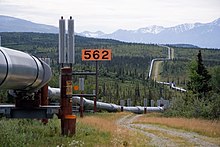
Operators of the Trans-Alaska Pipeline System, shut Jan. 8 while a leak is repaired, can’t say when the pipeline that carries 15 percent of U.S. crude oil output will be flowing again.

The shutdown has forced oil companies including BP Plc to suspend 95 percent of production from the North Slope area. The system, an 800-mile network crossing the northernmost U.S. state, was closed at about 8:50 a.m. Alaska time Jan. 8, operator Alyeska Pipeline Service Co. said in a statement. The line was still closed as of 2:21 p.m. local time yesterday with no estimate of when it would be returned to service, Michelle Egan, a spokeswoman for Alyeska, said in a telephone interview.

Oil futures in New York jumped as much as 2.2 percent to $89.98 a barrel, advancing for the first time in three days. The leak, which has been contained, was thought to be located in an underground section of piping encased in concrete at Pump Station 1, Alyeska said in its statement. Producers have been limited to 5 percent of normal output, Egan said.

“The shutdown is being factored into prices,” Ben Westmore, a minerals and energy economist at National Australia Bank Ltd. in Melbourne. “People are a little more concerned with supply constraints than they were six months ago.”

The shutdown is a further setback for BP, whose well blowout in the Gulf of Mexico in April led to the biggest offshore oil spill in U.S. history. Crude prices rose 21 percent in the second half of last year, and reached a 27-month high of $92.58 on Jan. 3 on speculation the U.S. economic recovery will boost fuel demand in the world’s biggest oil-consuming country.

Oil May Climb

Oil may climb further if the pipeline problem isn’t fixed, said Gavin Wendt, founding director at MineLife Pty in Sydney.

If there is no resolution by today, “we may see prices heading towards $90 a barrel or higher,” Wendt said. “The market is very susceptible to supply-side problems.”

The pipeline system transported an average 642,261 barrels a day last month, according to Alyeska’s website. The network starts in Prudhoe Bay on the North Slope and runs to Valdez, the northernmost ice-free port in North America. Since it began operating in 1977, Alyeska has shipped more than 16 billion barrels of oil, according to the website.

Tankers were being loaded with reserve inventories at Valdez yesterday, Egan said. She couldn’t estimate the amount of oil that remained in reserve.

“Engineers are assessing the situation and developing a plan to safely restart the pipeline,” Alyeska said. One possible plan would be to design a pipe bypass for the system, Egan said. “We are looking at a variety of options.”

Oil Recovery

There were no injuries and no “apparent impacts to the environment,” the company said. Federal and state staff are helping with the response and crews began recovering oil about seven hours after the shutdown, Alyeska said. About 90 of the oil, some nine or 10 barrels, that leaked into a booster pump building had been recovered yesterday, Egan said.

Toby Odone, a London-based spokesman for BP, said it’s up to Alyeska to provide updates, and declined to comment further. Alyeska is owned by BP, ConocoPhillips, Exxon Mobil Corp., Chevron Corp. and Koch Industries Inc., according to statements on its website.

BP is cutting crude output on Alaska’s North Slope by 95 percent, Steve Rinehart, a company spokesman, said by phone from Anchorage. BP’s North Slope production is about 410,000 barrels a day.

Prudhoe Bay and other Alaskan fields were BP’s largest source of crude in the Western Hemisphere in 2009 after the Gulf of Mexico, according to a public filing. Alaskan fields provided one in every 14 barrels of oil BP pumped worldwide that year. The company operates or holds stakes in 20 other fields on Alaska’s North Slope, as well as four pipelines.

Largest Field

BP owns 26 percent of Prudhoe Bay and neighboring fields in Alaska with Exxon, ConocoPhillips and Chevron. The Prudhoe Bay deposit, the largest field in the U.S., came online in 1977 and can produce about 400,000 barrels a day.

The Alaskan pipeline system was also shut last May after a leak, according to a company statement at the time. In March 2006, the Trans-Alaska system spilled 6,400 barrels in a leak caused by corrosion on a pipe wall.

“We have had significant production reduction before for various reasons, including bad weather,” said BP’s Rinehart. “It’s not uncommon.” The company can’t tell how long the shutdown will last, he said.

ConocoPhillips has prorated its production to 5 percent, Natalie Lowman, a ConocoPhillips spokeswoman in Anchorage, said yesterday in a telephone interview.

BP Stock

BP shares have gained about 60 percent since June after the company agreed to set up an escrow account to pay for the cleanup and economic losses from the Macondo well blowout. The April 20 explosion, which killed 11 workers, destroyed Transocean Ltd.’s $365 million Deepwater Horizon rig and spewed crude for 87 days.

Bad decisions by BP, Halliburton Co. and Transocean coupled with lax government oversight contributed to the incident, the National Commission on the BP Deepwater Horizon Oil Spill said Jan. 5.

BP stock closed at 492.5 pence in London last week. The shares tumbled 22 percent last year after the explosion in the Gulf of Mexico.


Read More

http://www.businessweek.com/news/2011-01-09/alaskan-pipeline-shutdown-cuts-oil-output-pushes-crude-higher.html

Monday, December 13, 2010

Baggage fees send airline revenue soaring


The sky appears to be the limit when it comes to the revenue airlines reap from passenger fees.

The 20 largest U.S. carriers collected $906.4 million in baggage-related charges during the third quarter, a 23 percent jump from 2009 results, according to data released Monday by the Bureau of Transportation Statistics.

New baggage fees for international routes, a rebound in air travel and passenger frustration over limited overhead space in airplane cabins all contributed to the skyrocketing fee income, observers said.

Some travelers are getting tired of dragging bags onto planes, while carriers are cracking down and forcing travelers to check jumbo-size carry-on bags in airport scanners before they leave airport lobbies, said Tom Parsons, founder and chief executive of BestFares.com.

"It could be that more people elected not to fight for overhead space, too," Parsons said.

Baggage fees are the most famous, or infamous to some, of the many new charges that reflect a fundamental shift in the way airlines interact with customers. Rather than offering a single, all-inclusive rate for food and other onboard offerings that often bordered on the mediocre, airlines are offering a menu of new services — for a charge.

"We were given pizza with all the works. If you just wanted a pepperoni or cheese pizza, you couldn't order it," said Jay Sorensen, president of IdeaWorks, a Wisconsin-based airline consulting company.

The concept has been around for decades and was a hallmark of early bargain-basement carriers like People Express in the 1980s. It was revived two years ago, when airlines found themselves in a desperate fight for survival as oil prices hit the stratosphere and Wall Street's collapse triggered a global recession.

But even as passengers sample new airline wares, ranging from satellite television to champagne brunch, many remain frustrated with the unbridled commercialization on display and uncertainty about the costs they face at the airport.

"You want to watch TV? Swipe the card," said Jason Schmidt, who was collecting his luggage at Chicago's O'Hare International Airport on Monday. "You want to eat? Swipe the card. You get nickel-and-dimed for everything."

Schmidt, 43, of McAllen, Texas, got a rude surprise when he checked his bag to Chicago. To avoid fees and carry-on hassles, Schmidt had jammed his possessions into one suitcase.

But at the check-in counter, his bag weighed 7 pounds over the 50-pound limit, costing Schmidt $75, instead of the $35 he would have paid for a second checked bag. "I think it's ridiculous," he said.

Much of the passenger frustration stems from the idea that they are paying for services that were once free, and that fees continue to proliferate even though airlines are again profitable.

United Airlines is making money — and lots of it — with a slew of new services, generating $1.88 billion last year in ancillary revenue, more than any other global carrier, according to a study by IdeaWorks and Amadeus, a global clearinghouse for airline transactions.

United continues to roll out new offerings such as FareLock, which for a $9 fee lets travelers lock in ticket prices on corporate sibling Continental Airlines for as long as seven days.

Another area of focus is meal service in United's economy cabin. The carrier is testing a champagne brunch, ordered before flights and available for $24.99 to passengers on some transcontinental flights. Those flying from San Francisco, London and Frankfurt can buy a "premium" meal, with a choice of three entrees, for $19.

This perk won't replace the free meal that's standard on international flights, said Rahsaan Johnson, a United spokesman.

"Customers were loud and clear that they wanted choice, but they wanted that choice to include a complimentary offering," he said, alluding to the firestorm United created several years ago when it considered replacing free meals with buy-onboard snack boxes on flights to Europe.

Baggage fees, however, remain the largest source of new income for most airlines by a wide margin, analysts said. Adopted by every U.S. carrier except Southwest Airlines, the controversial charges for checked luggage continue to be lucrative for U.S. airlines, which are on pace to report an annual profit this year for the first time since 2007.


Read More

http://www.chicagotribune.com/business/ct-biz-1214-bags-20101213,0,5697900.story

Tuesday, December 7, 2010

In hopeful sign, number of job openings up


WASHINGTON Employers posted a sharp increase in job openings in October, raising hopes that hiring could pick up in the coming months.

Businesses and government advertised nearly 3.4 million jobs at the end of October, up about 12 percent from the previous month, the Labor Department said yesterday. That reverses two months of declines and is the highest total since August 2008, just before the financial crisis intensified.

Overall, the number of advertised jobs has increased by about 1 million, or 44 percent, since the low point of July 2009, a month after the recession ended. But openings are still far below the 4.4 million advertised in December in 2007, when the recession began.

The latest job openings data follows last week’s disappointing employment report for November. That showed the economy added a net total of only 39,000 jobs, a steep drop from the previous month, and the unemployment rate rose to 9.8 percent from 9.6 percent.

But some economists consider yesterday’s report, known as the Job Openings and Labor Turnover survey, to be a signal of how much hiring might take place one to three months after the period covered by the survey.

Jonathan Basile, an economist at Credit Suisse, said the JOLTS report echoes other recent data showing that the economy is improving. That improvement will likely translate into more hiring soon, he said.

Last week’s employment report “should turn out to be just a bump in the jobs recovery road,’’ Basile said.

Separately yesterday, the Federal Reserve reported that consumer borrowing rose in October by the largest amount in more than two years, led by a big rise in the category that includes student loans.

The Fed said consumer credit rose at an annual rate of $3.4 billion in October, the largest increase since a $5.7 billion gain in July 2008. Consumer credit was also up in September.

But the strength in both September and October is being heavily influenced as the result of a recently enacted law that makes the government the primary lender to students.

The increase of $3.4 billion in overall credit surpassed the flat reading that economists had expected. The gain translated into a 1.7 percent rise and followed a 0.6 percent increase in September. Those were the first back-to-back monthly gains since mid-2008.

Read More

http://www.boston.com/business/articles/2010/12/08/in_hopeful_sign_number_of_job_openings_up/

Thursday, December 2, 2010

U.S. dollar, stocks poised to gain on jobs recovery


The U.S. dollar was steady on Friday ahead of payrolls data for November that could show more evidence of a strengthening recovery and give investors a reason to push benchmark U.S. Treasury yields above 3 percent and put more money in equities.

The euro slipped against the dollar after two days of gains, supported overnight by talk that the European Central Bank of was buying bonds of peripheral countries such as Ireland and Portugal, even though no new policy was formally announced.

With the euro little changed this week at $1.3211 and holding above its 200-day moving average despite the euro zone fiscal crisis, investors ahead of the U.S. payrolls report put cash to work in stock markets, lifting Japan's Nikkei share average to its highest since May.

"It is clear that the labor situation is improving and with consumption demand -- the final demand that drives all else -- strengthening by the day, hiring should continue to improve," economists at DBS Group in Singapore said in a note.

The Nikkei rose 0.6 percent .N225, driven higher mainly on buying of technology stocks.

For a second day, the technology sector also outperformed in the MSCI index of Asia Pacific stocks outside Japan .MIAPJ0000PUS. The index was up 0.5 percent and extended a 3.5 percent gain in the week, on track to exceed weekly returns of Japanese stocks for the first time in three weeks.

MACRO OUTLOOK

The U.S. economy is forecast to have generated 140,000 new jobs in November, with signs of a sustained recovery in private sector hiring combined with solid auto sales and continued industrial growth boding well for the macro outlook.

The improving U.S. economic picture has been a factor lifting the entire U.S. government bond yield curve higher.

The benchmark 10-year U.S. Treasury yield edged down to 2.98 percent compared with a four-month high of 3.03 percent reached on Thursday. Since Monday, the yield has risen 16 basis points, half of the entire rise since November.

Though the U.S. labor market report will be center stage on Friday, investors will also been watching for follow-through on Thursday's unexpected narrowing in the spread of higher risk European government bond yields over German bond yields.

Market chatter about the European Central Bank stepping into the market to buy bonds of at-risk countries such Spain and Portugal caused the Spain/Germany 10-year yield spread to narrow to 230 basis points, the least in two weeks.

The Portugal/Germany 10-year yield spread was at 344 basis points, the narrowest since Oct 28.

Read More

http://www.reuters.com/article/idUSTRE69K04L20101203

Tuesday, November 30, 2010

Before Business Leaders, Bernanke Discusses Unemployment’s Toll on Americans


Ben Bernanke, right, the Fed chairman, with I.B.M.'s chief executive, Samuel Palmisano, in Ohio.


COLUMBUS, Ohio — The Federal Reserve chairman, Ben S. Bernanke, found some respite on Tuesday from the second-guessing the central bank has faced since it announced a $600 billion effort to stimulate the slow recovery.

During a 75-minute discussion here with five business leaders, including the chief executives of I.B.M. and Ford Motor as well as the founder of a local chain of ice cream stores, inflation and monetary policy were not even mentioned, much less debated.

Mr. Bernanke did, however, emphasize the toll high unemployment was taking on families and on the share of the unemployed — more than 40 percent — who have been jobless for at least six months.

“At the pace of growth that we’re seeing now, we’re not growing fast enough to materially reduce the unemployment rate,” he said. The economy needs to grow at an annualized rate of 2 to 2.5 percent just to accommodate new workers coming into the labor force, he said. Mr. Bernanke has made this point repeatedly this year.

At 9.6 percent, the unemployment rate is about where it was when the recession officially ended in June 2009, Mr. Bernanke said, and only about a million of the 8.5 million jobs lost since the peak of the last economic expansion have been restored.

“Part of the barrier to faster growth and recovery is confidence in households that they will be financially secure and that they can make purchases and take chances in changing careers and changing locations,” Mr. Bernanke said. “With unemployment so high, that confidence is hard to come by.”

The discussion, organized by the Federal Reserve Bank of Cleveland and held at the Fisher College of Business at Ohio State University, was part of an effort by Mr. Bernanke to reach out more.

“We spend a lot of time, of course, looking at data, sitting in Washington, looking at the screen, but there’s only so much you can learn from that,” he said.

Sandra Pianalto, the president of the Cleveland Fed, who moderated the discussion, referred obliquely to the firestorm the Fed has faced in recent weeks. “Through my interactions with Ben, I’ve learned that extreme circumstances often require very creative and aggressive policy responses, and that the right decisions sometimes aren’t the most popular decisions,” she said.

While none of the executives criticized the Fed, Samuel J. Palmisano, the chief executive of I.B.M., said that uncertainty, particularly over regulations, was holding back businesses, not financial constraints.

“Clearly, there’s tons of liquidity, as you know,” he told Mr. Bernanke, who was seated to his left. “There’s probably more than we could consume. It’s not a credit issue. It’s not the financial system or a banking issue. I think at the end of the day it’s clarity.”

But two of the three local business owners on the panel said financial conditions were still tight. “Credit is much more tight today than it was in past years,” said Dwight E. Smith, founder of Sophisticated Systems, a provider of information technology services.

Curtis J. Moody, co-founder of Moody Nolan Architects, said, “The lines of credits are more difficult to get, and they’re lower.”

The business leaders agreed that the partisan climate in Washington was not helping matters. “Exports aren’t partisan, competitive tax policies aren’t partisan,” Mr. Palmisano said. “Economic expansion, job creation, isn’t political at the end of the day.”

Alan R. Mulally, the chief executive of Ford, said the government needed “a laser focus on creating an environment where businesses can grow.” He said that “currencies need to be set by the market” and “not manipulated,” and added, “We need to have trade agreements that actually allow us to export.”

That appeared to be a reference to a free trade agreement with South Korea that was negotiated by the Bush administration and is opposed by Ford. The Obama administration wants to complete the deal and submit it to Congress, but negotiations with South Korea have become stuck over restrictions on American auto and beef exports.

Mr. Bernanke said he took away from the discussion the need for clarity on regulatory, trade and fiscal matters. He also emphasized the importance of government support for technological innovation and the need to improve public education, community colleges and work force training.

Several M.B.A. students in the audience said that they had hoped Mr. Bernanke would discuss the Fed’s decision to buy bonds to reduce long-term interest rates, a topic they had debated in class. The students were generally skeptical about the strategy’s effectiveness.

“If you inflate the economy without doing anything about growth, you’re just printing money,” said one of the students, Jyotisko Sinha, 27.

Read More

http://www.nytimes.com/2010/12/01/business/economy/01fed.html?partner=rss&emc=rss

Federal workers rage over President Obama's two-year wage freeze


federal workers in New York had a few choice words for President Obama's decision Monday to freeze their wages for the next two years.

"That's why Obama's ratings are below [ex-President George W.] Bush's, and that's hard to be unless you're Osama Bin Laden," said Rosemarie Clemmens of Manhattan.

Clemmens, who works for the Social Security Administration, said she voted for Obama but won't again. "I can't wait until I retire," the life-long government worker added.

Even the Secret Service and FBI, among other federal law enforcement agencies, are taking a hit thanks to Obama's decree.

"Federal law enforcement officers have been sacrificing for our country since the attacks on 9/11, and now we're being asked to bear the brunt of a failing economy," said Jon Adler, president of the Federal Law Enforcement Officers Association.

"This is disheartening, but it won't dilute our honor for serving our country," he said, adding that a pay freeze should be a last resort, not the first.

Signaling a distinct shift toward austerity, Obama announced a two-year pay freeze for federal workers, saving up to $5 billion in two years, and $28 billion in five.

"The hard truth is getting this deficit under control is going to require some broad sacrifice, and that sacrifice must be shared by the employees of the federal government," Obama said.

Obama's lower lip was distinctly swollen after taking an elbow during a Friday basketball game, but he said doctors have cleared him to get back on the court.


Read more:
http://www.nydailynews.com/news/politics/2010/11/30/2010-11-30_fed_workers_rage_over_wage_freeze.html#ixzz16lS6FiS9